

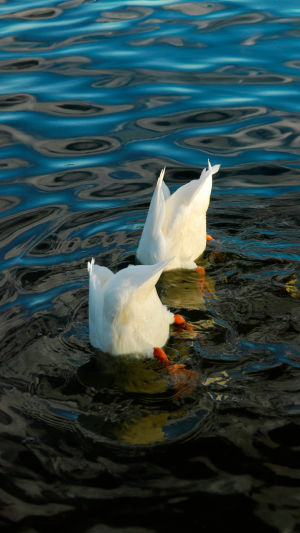
Watching ducks paddle along a pond, it's easy to underestimate the skill behind their feeding. They seem calm, but beneath the surface, ducks are masters at finding food efficiently.
Their techniques vary depending on water depth, food type, and even the season, allowing them to thrive in diverse habitats.
Understanding these behaviors can reveal the subtle intelligence in their foraging.
<h3>Surface feeding techniques</h3>
<b>Dabbling for floating food</b>
Ducks often tip forward with their heads submerged, leaving tails in the air. This dabbling method allows them to reach algae, seeds, and small insects floating near the water surface. For example, a mallard can skim several centimeters below the surface to catch tiny plant matter without fully diving, conserving energy.
<b>Skimming while swimming</b>
Some ducks sweep their bills along the water as they glide, straining small organisms from the surface. This motion combines feeding with locomotion, so ducks can cover large areas efficiently. Observing a group of ducks in a pond, you might notice synchronized skimming, which increases the chance of spotting hidden insects or seeds.
<b>Shaking and tossing water</b>
After dipping their bills, ducks often shake their heads to filter out water while trapping edible items. This technique is especially effective for sifting out tiny crustaceans or larvae from murky surfaces.
<h3>Diving and underwater foraging</h3>
<b>Shallow diving</b>
Some ducks dive completely underwater to reach plants, invertebrates, or small fish. Shallow dives allow them to exploit resources unavailable at the surface. For example, a pochard can reach underwater vegetation just below the pond's surface, nibbling leaves before resurfacing.
<b>Deep diving strategies</b>
Species like the canvasback or scaup perform longer dives in deeper water to access submerged plants or mollusks. They tuck their legs and use strong webbed feet to propel downward, sometimes staying submerged for over half a minute. Timing and energy efficiency are crucial here; ducks learn to balance the depth of the dive with oxygen use.
<b>Using water currents</b>
Diving ducks often take advantage of natural water movements to bring food within reach. By positioning themselves in small currents or near submerged plants swaying in the flow, they can catch drifting invertebrates without expending extra energy.
<h3>Shoreline and mud foraging</h3>
<b>Probing soft mud</b>
Ducks may wade into shallow edges of ponds and rivers, using their bills to probe mud for worms, larvae, and seeds. A mallard, for instance, can tilt its bill sideways to scoop up hidden insects in muddy banks.
<b>Grubbing among vegetation</b>
At the water's edge, ducks often pull or shake grass and aquatic plants to uncover insects or small snails. This behavior shows their adaptability—feeding isn't limited to water alone.
<b>Opportunistic picking</b>
Ducks are quick to grab fallen seeds, berries, or insects near the shore. Observing a group, you might notice several ducks competing gently, which helps younger ducks learn feeding spots from more experienced ones.
<h3>Seasonal and environmental adaptations</h3>
<b>Adjusting to water levels</b>
During dry seasons or when water levels drop, ducks shift from diving to dabbling more frequently, relying on remaining shallow pools and mudflats. This flexibility ensures they can still access enough food even in challenging conditions.
<b>Following other animals</b>
Ducks sometimes follow fish or larger waterbirds to take advantage of stirred-up insects or plant matter. This strategy reduces effort while increasing foraging success.
<b>Feeding during migration</b>
Migratory ducks often refuel at wetlands rich in seeds and aquatic plants. They time feeding around daylight and weather patterns, demonstrating how environmental awareness affects their efficiency.
Ducks are far from passive in water; their foraging techniques show remarkable adaptability and intelligence. From dabbling at the surface to probing muddy banks and diving for hidden treats, they employ multiple strategies to survive and thrive.
Next time you watch ducks on a pond, notice how every movement—from a head dip to a gentle paddle—serves a purpose. Their quiet efficiency reminds us that even simple creatures can master complex survival skills.


