

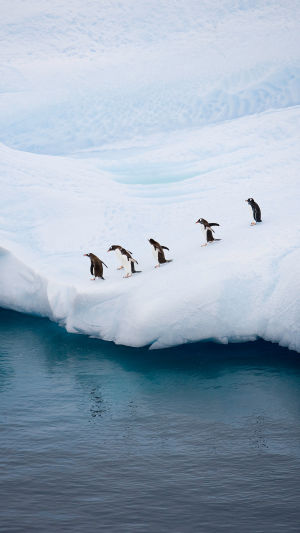
Watching penguins waddle across ice or dive gracefully into the sea is a delight, but there's more to these birds than meets the eye.
From their social quirks to their remarkable survival strategies, penguins reveal fascinating behaviors that continue to surprise scientists and nature enthusiasts alike.
<h3>Unique Walking Styles</h3>
Penguins are known for their distinctive waddle. Unlike most birds, their upright posture and short legs create a side-to-side motion that is both energy-efficient and charming.
<b>Conserving energy</b>: The waddle helps them maintain balance while walking long distances on ice or snow. For example, emperor penguins often travel up to 50 kilometers during winter to reach their breeding colonies, and the waddle reduces strain on their muscles.
<b>Sliding on bellies</b>: Penguins often use “tobogganing,” sliding on their bellies across snow. This not only saves energy but also allows them to reach feeding grounds faster. A practical takeaway for wildlife watchers is to observe these slides closely—they reveal how penguins adapt movement to their environment.
<h3>Remarkable Diving Skills</h3>
Penguins are exceptional swimmers, capable of diving hundreds of meters in search of food. Their streamlined bodies and strong flippers make them agile underwater hunters.
<b>Depth and duration</b>: Emperor penguins can dive up to 500 meters and remain submerged for over 20 minutes. This ability allows them to access prey unavailable to many other predators.
<b>Food hunting techniques</b>: Penguins target fish, squid, and krill, often coordinating dives with group hunting strategies. For instance, a group of Adélie penguins may encircle a school of fish to increase capture efficiency. Watching these coordinated movements provides insights into their social intelligence.
<h3>Social Bonding and Communication</h3>
Penguins thrive in colonies, sometimes numbering in the tens of thousands. Social interaction is essential for survival and reproduction.
<b>Vocal recognition</b>: Each penguin has a unique call used to identify mates or chicks. During breeding season, parents return from the sea and recognize their chick among thousands by sound alone.
<b>Mutual care</b>: Penguins huddle together in extreme cold to conserve heat, a behavior especially notable in emperor penguins. This huddling allows them to survive Antarctic winters where temperatures can drop below -40°C. Observing these groups highlights the importance of teamwork in nature.
<h3>Breeding and Parenting</h3>
Penguin reproduction is an intricate process filled with dedication and endurance.
<b>Egg incubation</b>: Male emperor penguins incubate eggs on their feet under a brood pouch for around two months without eating. This remarkable endurance ensures the chick's survival in harsh conditions.
<b>Shared responsibilities</b>: Once hatched, both parents take turns feeding and protecting the chick. For first-time wildlife enthusiasts, visiting breeding colonies during the season can reveal how cooperative parenting ensures the next generation thrives.
<h3>Adaptations to Extreme Environments</h3>
Penguins have evolved multiple adaptations to survive in some of the planet's harshest habitats.
<b>Thermal regulation</b>: Their dense feathers provide waterproofing and insulation, while a thick layer of blubber helps maintain body heat. Even in icy waters, they remain active and agile.
<b>Camouflage and safety</b>: The black-and-white coloration serves as counter-shading—white bellies blend with the bright water surface from below, while dark backs hide them from predators above. This clever adaptation makes penguins masters of both stealth and survival.
Observing penguins in their natural habitat offers lessons beyond biology. Their resilience, social cooperation, and energy-efficient strategies can inspire humans to value teamwork, persistence, and clever adaptation in daily life. The next time you see a penguin sliding across the ice or diving into the sea, remember that each movement is a combination of instinct, skill, and an impressive survival toolkit honed over millennia.
Penguins remind us that even in challenging environments, creativity, cooperation, and careful planning are keys to thriving, whether in nature or in our own daily lives.


