

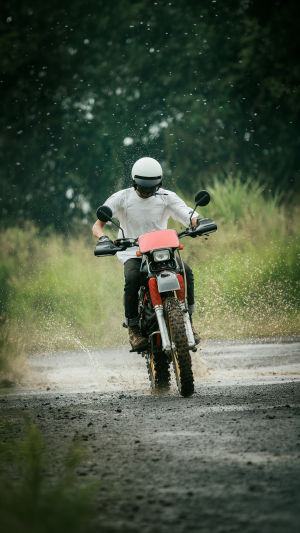
The sky darkens faster than expected, and within minutes the road turns glossy and reflective.
Rain changes everything on a motorcycle. The same curve you rode confidently yesterday now feels uncertain. The painted lines look slick, traffic slows unpredictably, and visibility drops.
Riding in wet conditions isn't about being fearless—it's about adjusting your technique so the bike stays stable and predictable from start to finish.
<h3>1. Slow Down and Smooth Everything Out</h3>
Rain reduces traction because water sits between your tires and the pavement. That thin layer lowers grip, especially during the first 10 to 20 minutes of rainfall when oil residue rises to the surface.
To stay safe, focus on:
<b>- Gentle throttle inputs</b>
<b>- Progressive braking</b>
<b>- Gradual steering</b>
Abrupt movements are the biggest risk in wet weather. Snapping the throttle open can spin the rear tire. Grabbing the brake suddenly can cause a slide. Smoothness and control become your most valuable skills.
Actionable example: Practice rolling on the throttle as if you're turning a dimmer switch, not flipping a light switch. When braking, squeeze the lever progressively rather than quickly pulling it. Give yourself twice the normal following distance so you don't need sudden inputs.
<h3>2. Increase Following Distance</h3>
Stopping distances increase on wet pavement because available traction decreases. Even with modern braking systems, water reduces tire grip.
Key adjustments include:
<b>- Double your space cushion</b>
<b>- Anticipate traffic changes</b>
<b>- Brake earlier than usual</b>
If you normally follow at a three-second gap, extend it to at least five or six seconds in heavy rain. This gives you time to respond gradually rather than react abruptly.
Actionable example: Pick a roadside object like a signpost. When the vehicle ahead passes it, start counting. In rain, you should finish counting at least five seconds before you pass the same point. This simple habit dramatically lowers stress and improves reaction time.
<h3>3. Avoid Hazardous Surfaces</h3>
Certain road surfaces become especially slippery when wet. Painted lane markings, metal covers, bridge expansion joints, and smooth concrete patches offer less grip than regular asphalt.
Be mindful of:
<b>- Painted road lines</b>
<b>- Manhole covers</b>
<b>- Steel plates</b>
Cross these surfaces as upright as possible and avoid braking or accelerating while on them. Leaning or braking hard over metal surfaces increases the chance of losing traction.
Actionable example: When approaching an intersection, scan ahead for painted crosswalk lines. Adjust your path slightly so you cross them upright and steady, rather than leaning while turning across them.
<h3>4. Improve Visibility—See and Be Seen</h3>
Rain affects not only traction but also visibility. Water droplets blur your visor, and vehicle spray reduces contrast. At the same time, other drivers may struggle to see you.
To improve visibility:
<b>- Keep your visor clean</b>
<b>- Use anti-fog treatment</b>
<b>- Wear high-visibility gear</b>
A clean visor with anti-fog treatment prevents internal condensation. Reflective or bright riding gear helps other road users spot you sooner in low light and heavy rain.
Actionable example: Before riding in wet weather, apply anti-fog solution inside your visor and carry a microfiber cloth. If visibility worsens during a stop, wipe the visor clean. Small preparation steps can prevent large risks later.
<h3>5. Adjust Cornering Technique</h3>
Corners demand extra care in the rain. Reduced grip means you must approach turns with more caution and smoother control.
Safer wet cornering includes:
<b>- Reduce entry speed</b>
<b>- Lean smoothly</b>
<b>- Roll on throttle gently</b>
Entering a turn too quickly forces mid-corner corrections, which are riskier on wet pavement. Slow down before the turn, then maintain a steady throttle through the curve.
Actionable example: Before a visible bend, finish most of your braking while upright. Enter slightly slower than you would on dry pavement. Focus on a smooth, continuous lean rather than sharp steering inputs. As you exit, apply throttle gradually to stabilize the bike.
Rain riding requires patience. It asks you to think ahead, move deliberately, and respect changing road conditions. The goal isn't to fight the weather but to adapt to it. When you slow your inputs, widen your safety margins, avoid slick surfaces, and maintain visibility, the motorcycle becomes predictable again—even on wet pavement.
The next time clouds gather and rain starts to fall, remember that skill—not speed—defines safe riding. With calm adjustments and careful control, you can handle rainy roads with confidence and composure.


