

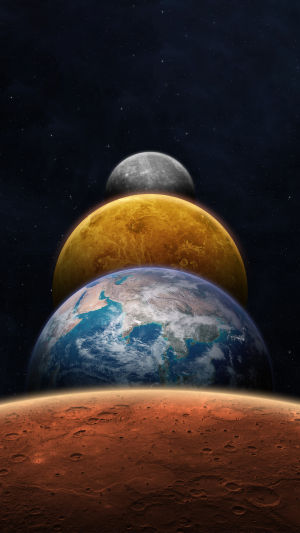
Have you ever wondered why planets orbit stars or why objects fall to the ground?
It all comes down to gravity. Gravity is the invisible force that governs the way objects interact with each other in the universe.
Albert Einstein's theory of relativity redefined our understanding of gravity by showing that it isn't just a force acting between masses, but a warping of space and time itself. This concept, though difficult to grasp at first, has had a profound impact on how we view the universe.
Before Einstein, Isaac Newton's law of universal gravitation was the leading explanation. According to Newton, gravity was a force that pulled objects towards each other, but Einstein took this idea a step further. He proposed that gravity is the result of massive objects bending the fabric of space-time, which causes other objects to follow curved paths.
<h3>The Basics of Einstein's Theory of Relativity</h3>
Einstein's theory of relativity is composed of two parts: special relativity and general relativity.
<b>1. Special relativity: </b>This part focuses on objects moving at constant speeds, especially those moving close to the speed of light. Einstein showed that time and space are not absolute but relative to the observer's speed. For example, time runs slower for a person moving at a high speed compared to someone who is stationary.
<b>2. General relativity: </b>This is the part of the theory that deals with gravity. Einstein explained that space and time are connected in a four-dimensional continuum, often called “space-time.” Massive objects, like the Earth or the Sun, warp this space-time, creating what we perceive as gravity. Objects like planets or light follow the curved paths created by this warping.
One of the key examples that illustrates this concept is the idea of a heavy ball placed on a stretched rubber sheet. The ball causes the sheet to sag, and smaller objects placed on the sheet will roll toward the ball. Similarly, planets and stars create indentations in space-time that cause smaller objects, such as satellites or asteroids, to move in curved paths.
<h3>Real-World Applications of Relativity</h3>
Einstein's theory of relativity is not just a theoretical concept; it has real-world applications that affect our daily lives. A prime example is the GPS (Global Positioning System). GPS satellites orbit the Earth and rely on highly accurate clocks to determine positions. However, because the satellites are moving at high speeds and are farther from Earth's gravity, time passes differently for them compared to people on the ground. If we didn't take relativity into account, the GPS system would be off by several kilometers every day.
Another application of general relativity is in the study of black holes. When a star collapses under its own gravity, it can form a black hole, a region of space where gravity is so strong that not even light can escape. The theory of relativity helps scientists understand the behavior of matter and energy near these extreme regions.
<h3>Einstein's Legacy and Impact</h3>
Einstein's theory of relativity has transformed not only physics but also the way we think about the universe. Before him, the idea that space and time were interconnected was almost inconceivable. However, Einstein's ideas have been proven time and time again through experiments and observations.
For instance, the bending of light around massive objects like the Sun (known as gravitational lensing) was confirmed during a solar eclipse in 1919. This phenomenon could only be explained through Einstein's general theory of relativity.
His work also paved the way for the development of technologies like nuclear energy, which relies on principles of relativity for understanding how atoms release energy. Without Einstein's contributions, much of modern science and technology would be vastly different.
<h3>Why Understanding Gravity and Space Matters</h3>
Einstein's theory doesn't just satisfy academic curiosity; it has far-reaching implications for our understanding of the universe and its history. It helps scientists study the origins of galaxies, the formation of black holes, and the expansion of the universe itself.
One of the most exciting areas of research today involves looking for gravitational waves—ripples in space-time caused by massive events like the collision of black holes. The detection of these waves, first announced in 2015, was another victory for Einstein's theory and a breakthrough in astrophysics.
In our everyday lives, the principles of relativity remind us of how interconnected everything is. The universe isn't a simple collection of objects floating in space; it's a dynamic, ever-changing system where space and time are fluid. Our understanding of these concepts is key to the advancements of science, technology, and even our sense of place in the cosmos.
<h3>Reflecting on the Power of Einstein's Insights</h3>
Einstein's theory of relativity challenges our intuition, but it also deepens our understanding of the universe. By teaching us that gravity is not just an invisible force but a result of the curvature of space-time, Einstein's work has opened up a new way of thinking about the world.
As we continue to explore the cosmos, the impact of Einstein's ideas will only grow. The next time you look up at the stars or hear about a new scientific discovery, remember that it all began with a brilliant mind who dared to look beyond the conventional.


