

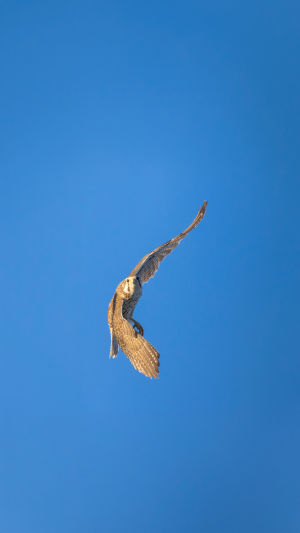
On a crisp morning, you might glance up and see a small shadow streak across the sky.
Before you can fully register it, the bird has vanished—diving at extraordinary speed toward its prey. Peregrine falcons are nature's ultimate aerial hunters, combining breathtaking velocity with surgical precision.
Their dives are a masterpiece of evolution, physics, and instinct, giving them an edge few other predators can match.
<h3>Design for Speed</h3>
The peregrine falcon's body is built for velocity. Sleek, aerodynamic shapes reduce drag, and powerful muscles generate incredible propulsion.
<b>1. Body Structure</b>
Their long, pointed wings and streamlined body allow air to flow smoothly, minimizing resistance. The falcon tucks its wings and narrows its profile during dives, achieving speeds over 300 kilometers per hour—the fastest recorded for any animal.
<b>2. Actionable Example</b>
Bird enthusiasts can observe wing shapes in various raptors. Noticing how wing length, tip shape, and body alignment differ between gliding eagles and diving falcons highlights the role of form in flight performance.
<h3>Precision Targeting</h3>
Speed alone isn't enough; the falcon must strike accurately while moving at extreme velocities.
<b>1. Visual Acuity</b>
Peregrines have eyes adapted for detail. Their high density of retinal cells and deep fovea allow them to detect small, fast-moving prey from hundreds of meters above. They can judge distance and angle with remarkable accuracy even during steep dives.
<b>2. Actionable Example</b>
While watching birds of prey, take note of how they adjust their approach mid-flight. Observing small corrections in wing angle or body tilt demonstrates real-time calculation similar to falcons during hunts.
<h3>Hunting Strategy and Technique</h3>
A dive isn't a random plunge—it's a carefully timed maneuver using both altitude and environmental conditions.
<b>1. Stooping Method</b>
Peregrines often spot prey from a perch or soaring high above, then perform a “stoop,” folding wings and diving steeply. This tactic conserves energy, increases speed, and surprises prey, giving minimal reaction time.
<b>2. Actionable Example</b>
Try observing falcons at wildlife sanctuaries or urban nesting sites. Notice how they circle, gain height, and choose their dive angle. Understanding these patterns reveals the planning and patience behind each strike.
<h3>Physics of the Dive</h3>
The stoop combines gravity, aerodynamics, and muscular control to reach extreme speeds safely.
<b>1. Airflow and Control</b>
By adjusting wing position, tail spread, and body tilt, the falcon maintains stability and navigates through turbulent air. Its respiratory and cardiovascular systems support rapid oxygen intake, preventing blackout despite high g-forces.
<b>2. Actionable Example</b>
If you study bird flight videos, slow-motion footage of dives shows subtle body adjustments. These demonstrate how physics and biology work together to allow both speed and control—a lesson in natural engineering.
<h3>Energy Management and Recovery</h3>
High-speed dives are exhausting, so falcons manage energy carefully.
<b>1. Recovery and Circling</b>
After a dive, falcons glide or circle to recover. This prevents overexertion and allows them to conserve energy for subsequent dives or return trips to the nest.
<b>2. Actionable Example</b>
Watching falcons post-dive, notice their transition from vertical plummet to smooth gliding. This pattern highlights the importance of energy conservation even in extreme hunting strategies.
The peregrine falcon’s dive is not just an act of extreme speed, but a finely tuned expression of evolutionary engineering, heightened perception, and precise aerial control. Each stoop reflects a seamless integration of aerodynamic design and instinctive mastery, allowing the bird to hunt with unmatched accuracy. Witnessing this behavior offers a reminder of how nature refines both structure and behavior into extraordinary efficiency, where every movement serves survival with remarkable elegance.


