

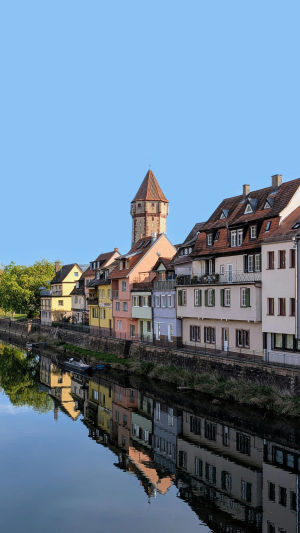
Stepping off the train in Strasbourg feels like walking directly into the pages of a medieval storybook.
As the capital of the Grand Est region in France, this city is a breathtaking fusion of French elegance and German charm.
The air is filled with the scent of fresh pastries, and the sound of the Ill River lapping against timber-framed houses creates a soothing soundtrack for your journey. Whether you are wandering through the narrow alleys of Petite France or gazing up at the sheer scale of the Strasbourg Cathedral, Strasbourg offers a visual richness that most modern cities have long forgotten.
Strasbourg, France
<h3>Architectural Wonders of the Grand Île</h3>
The heart of the city is the Grand Île, a historic island surrounded by the Ill River and recognized as a UNESCO World Heritage Site.
The crown jewel here is Strasbourg Cathedral, a Gothic masterpiece that was once the world’s tallest building. Its intricate façade, carved from Vosges pink sandstone, changes color depending on the sunlight, shifting from soft rose to deep amber.
Inside, the Renaissance astronomical clock performs its mechanical display every afternoon—a well-documented historical attraction.
Beyond the cathedral, Petite France awaits. This district, once home to tanners and millers, is now famous for its half-timbered houses, flower-lined canals, and postcard-perfect streets.
<h3>A Journey Through Flavors</h3>
The culinary scene in Strasbourg blends refined techniques with rich regional traditions.
You must try Tarte Flambée, a thin, crispy flatbread topped with cream, onions, and mushrooms. It is light, flavorful, and perfect for sharing at a riverside café.
For dessert, the local Kougelhopf, a crown-shaped brioche with almonds and raisins, is a must. Many bakeries continue to use traditional recipes passed down through generations.
<b>Typical pricing:</b>
- Casual café meal: ~$10–$20 per person
- Bakery items: ~$3–$8
<h3>Practical Travel Essentials</h3>
To make the most of your visit, plan your logistics with these helpful details:
<b>1.</b> Transportation: The best way to arrive is via the TGV high-speed train from Paris (about 1 hour 45 minutes). Within the city, use the efficient tram system (~$2 per ride) or rent a bicycle, as the center is largely pedestrianized (~$10–$18 per day).
<b>2.</b> Cathedral Access: The cathedral is open daily from 8:30 AM to 5:45 PM. Entrance to the main nave is free, but climbing the 330 steps to the platform costs approximately $9.
<b>3.</b> River Tours: Batorama boat tours depart near the cathedral and provide a 70-minute guided tour of the city for about $16.
<b>4.</b> Accommodation: For a boutique experience in Petite France, expect to pay around $180–$250 per night. Budget-friendly options near the train station range from $85–$120 per night.
<b>5.</b> Opening Hours: Most shops are closed on Sundays, so plan your souvenir shopping for Friday or Saturday.
<h3>Exploring the European Quarter</h3>
For contrast, visit the European Quarter, home to the European Parliament and the Council of Europe.
These modern buildings reflect Strasbourg’s role in promoting unity and cooperation. Walking from the historic center to this district reveals a striking journey through centuries of European history.
Strasbourg is more than a beautiful destination—it is a symbol of cultural harmony. For centuries, it stood between different influences, yet evolved into a place where traditions blend seamlessly.
Walking across its bridges, you begin to understand that true strength lies in balance—between past and future, tradition and innovation. Strasbourg leaves visitors not only with stunning memories, but also with a deeper appreciation for unity and coexistence.


