

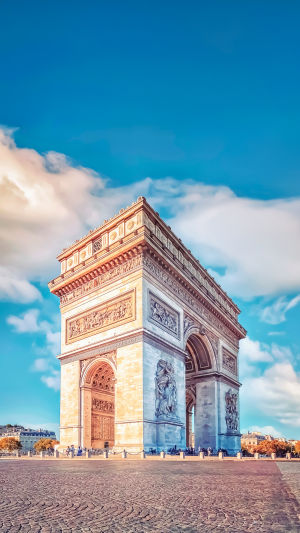
Standing at the center of a chaotic twelve-way intersection, the Arc de Triomphe is the majestic anchor of Paris's most famous avenue, the Champs-Élysées.
It is not just a monument; it is a gateway that connects the grand past of the nineteenth century with the vibrant energy of modern France.
As you stand beneath its massive vault, the roar of the city fades into a quiet reverence for the figures whose names are etched into the stone. Whether you are there for the architecture or the breathtaking rooftop views, this limestone giant remains an essential pillar of any Parisian adventure.
Arc de Triomphe
<h3>Architectural Grandeur and Design</h3>
The arch was commissioned by Napoleon I after a significant victory to recognize the achievements of the Grande Armée. However, the leader never saw it completed. Work began in 1806 but was stalled for years due to changing leadership and architectural shifts, finally reaching completion thirty years later. The design is deeply influenced by the Arch of Titus in Rome but on a much grander scale, standing nearly 50 meters tall.
The facades are covered in elaborate sculptural reliefs, the most famous being "La Marseillaise" by François Rude, which depicts volunteers heading to a grand cause. Look closely at the inner walls to find the names of 660 historical leaders; those underlined represent individuals who passed away during their service. This intricate carving transforms the massive structure into a giant history book, documenting the dedication shown for the nation.
<h3>The Eternal Flame of Remembrance</h3>
Beneath the arch lies the Tomb of the Unknown Soldier, a poignant memorial added in the early 1920s. Every evening at 6:30 PM, a solemn ceremony takes place to rekindle the Eternal Flame. This ritual has occurred every single day since 1923, even during difficult historical periods, serving as a symbol of an unbreakable spirit.
Visitors can walk around the base for free to admire the sculptures and the flame, but the real magic happens at the top. To reach the terrace, you must climb 284 steps (though an elevator is available for those with limited mobility).
From the summit, you are at the center of the "Place de l'Étoile," where twelve avenues radiate outward like the points of a star. It provides the most symmetrical view of Paris, offering a perfect alignment with the Louvre in one direction and the modern skyscrapers of La Défense in the other.
<h3>Essential Visitor Logistics</h3>
Navigating the busiest roundabout in Paris requires knowing the "secret" entrance—never try to cross the traffic on foot; use the underground tunnels instead.
<b>Practical Travel Information:</b>
1. Transportation: Take the Metro (Lines 1, 2, or 6) or the RER A to the Charles de Gaulle-Étoile station. Exit via the "Arc de Triomphe" tunnels located on the Champs-Élysées side.
2. Opening Hours: The monument is open daily from 10:00 AM to 11:00 PM during the peak season and until 10:30 PM in the cooler months.
3. Admission Prices: Entry to the base is free. A ticket to the museum and the rooftop terrace costs approximately $17 for adults. Admission is usually free for those under 18.
4. Activity Costs: Guided tours providing deeper historical context are available for an additional $7 to $12.
5. Accommodation Options: Staying near the Champs-Élysées is premium. Mid-range options like the Armoni Hotel or Westside Arc de Triomphe range from $145 to $185 per night. For luxury, the Hyatt Regency Paris Etoile offers rooms for $340 to $490 per night.
<h3>Capturing the Perfect Sunset</h3>
For the best photography, visit the rooftop about thirty minutes before sunset. This timing allows you to see the city in the "golden hour" light and watch as the Eiffel Tower begins its hourly sparkle. The view from the Arc is often considered superior to the Eiffel Tower itself because you can actually include the tower in your photos.
The terrace also features a small museum and a gift shop where you can find high-quality replicas and books on Parisian landmarks.
<h3>Respecting the Sacred Ground</h3>
As you explore, remember that the arch is a site of active commemoration. While it is a major tourist destination, the area around the central memorial is treated with great respect. Security is tight, and large bags are generally not permitted inside the monument. By arriving early in the morning or late in the evening, you can avoid the heaviest tour groups and experience the silent power of the monument as the city lights begin to flicker on around you.
The Arc de Triomphe stands as a bridge between the old world and the new. From its origins as a celebratory structure to its status as a global symbol of perseverance, it offers a layered experience that is both visually stunning and emotionally resonant. Whether you are navigating the tunnels to stand beneath its shadows or looking down at the star of avenues from its roof, the arch provides a definitive Parisian moment that stays with you long after you leave the city.


