

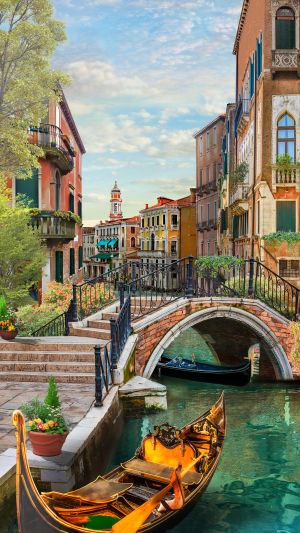
Imagine waking up to the sound of water lapping against ancient stone walls instead of the roar of engines.
In Venice, the streets are paved with emerald water, and the taxis are sleek wooden boats gliding under bridges that have stood for centuries.
This Italian masterpiece is a labyrinth of 118 islands linked by over 400 bridges, offering a sensory explosion of Renaissance art, Byzantine architecture, and the faint scent of salt air. It is a place where getting lost is not a mistake—it is the ultimate way to discover the hidden magic of the Venetian lagoon.
Venice
<h3>The Grand Canal and St. Mark's Majesty</h3>
The Grand Canal serves as the main artery of the city, snaking in a massive S-curve past palaces that look like they were carved from ivory. To truly witness the scale of Venetian wealth, one must head to St. Mark's Square. The Basilica di San Marco stands as a golden monument to Byzantine influence, covered in millions of tiny glass tiles that shimmer when the sun hits them.
Adjacent to the Basilica is the Doge's Palace, the former seat of Venetian power. Its pink and white marble facade hides dark secrets, including the famous Bridge of Sighs. Legend has it that prisoners would catch their last glimpse of the beautiful city through the bridge's small windows before being led to their cells. Walking through these historic halls provides a visceral connection to a maritime empire that once dominated global trade.
<h3>Island Hopping: Glass and Lace</h3>
While the main islands hold the heavy-hitters, the smaller islands in the lagoon offer specialized artisan crafts that cannot be found anywhere else. Murano is the world capital of glassmaking. Here, you can watch master blowers transform molten sand into intricate chandeliers and delicate figurines in matter of minutes.
Further out lies Burano, a kaleidoscopic explosion of color. Every house is painted a different bright shade—fuchsia, lime green, deep azure—to help fishermen find their way home in the thick lagoon fog. Burano is world-renowned for its needle-point lace, a craft preserved by local women for generations. Visiting these islands provides a quieter, more authentic look at the traditional industries that still sustain the local population.
<h3>Essential Traveler Logistics</h3>
Navigating a city with no cars requires some preparation. Venice is expensive, but with the right information, you can manage your budget effectively.
<b>Practical Travel Information:</b>
1. Transportation: From Marco Polo Airport, take the Alilaguna water bus for approximately $16. Within the city, use the Vaporetto (water bus). A single 75-minute ticket costs $10, but a 24-hour pass is a better value at roughly $27.
2. Opening Hours: St. Mark's Basilica is typically open from 9:30 AM to 5:15 PM. The Doge's Palace opens at 9:00 AM and usually closes at 7:00 PM.
3. Admission Prices: Entry to the main floor of the Basilica is free, but accessing the museum and terrace costs $8. Tickets for the Doge's Palace are approximately $32.
4. Activity Costs: A private gondola ride follows a fixed rate of $88 for 30 minutes during the day, increasing to $110 after 7:00 PM.
5. Accommodation Options: Staying in the Cannaregio district offers a more local feel with prices ranging from $140 to $220 per night. Luxury hotels on the Grand Canal, such as the Gritti Palace, often exceed $800 per night.
<h3>Culinary Traditions Without the Frills</h3>
Venetian cuisine is defined by its proximity to the sea. Skip the "tourist menus" in the main squares and look for cicchetti—traditional Venetian small plates that locals enjoy standing at casual counters. Popular options include Sarde in Saor (sweet and sour sardines with pine nuts and raisins) and creamy cod spread served on slices of crusty bread.
For a main meal, seek out Seppie al Nero—squid cooked in its own ink, served over creamy yellow polenta. These seafood dishes are deeply tied to the lagoon's ecosystem and offer a genuine taste of the city's history.
<h3>The Art of the Gondola</h3>
The gondola is more than just a boat; it is a specialized craft made of eight different types of wood, including oak, walnut, and cherry. The boat is purposefully asymmetrical to compensate for the weight of the gondolier standing on one side. While the price is steep, the perspective you gain from the water level is incomparable. You will see hidden water gates once used for delivering silk and spices directly into the basements of noble families.
Venice remains a testament to human ingenuity and the pursuit of beauty against all odds. From the bustling crowds of the Rialto Bridge to the silent, echoing alleys of the historic Ghetto, the city offers a timeless escape from the modern world. By planning your transport and respecting the delicate balance of this floating world, you can experience a piece of history that continues to defy the tides.


