

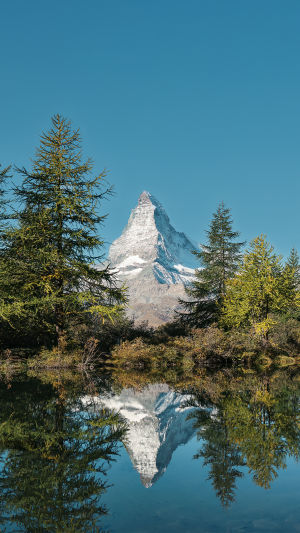
High above the bustling village of Zermatt, tucked away in a hollow of ancient Larch trees, lies Grindjisee. It is not the largest lake in the Swiss Alps, nor the easiest to reach, but it is arguably the most poetic.
At an altitude of 2,334 meters, this crystalline body of water acts as a perfect natural mirror for the world's most iconic peak: the Matterhorn.
While other lakes in the region are wide and exposed, Grindjisee feels like a secret garden, where rare wildflowers carpet the shore and the only sound is the whistling of the mountain wind through the needles of golden pines.
Grindjesee
<h3>The Five Lakes Trail Adventure</h3>
Grindjisee is the second stop on the famous "5-Seenweg" (Five Lakes Trail), a premier hiking route in the Valais region. The journey begins with a funicular ride through the mountain rock, transporting you to a world of thin air and rugged beauty. The trail to Grindjisee is a descent from the Blauherd station, winding through rocky paths and alpine meadows.
What makes this specific lake unique is its lush vegetation. Unlike its more barren neighbors, Grindjisee is surrounded by a diverse ecosystem. In the early summer, the banks are home to rare alpine flora, including the protected Edelweiss and vibrant globeflowers. The contrast between the soft green mosses of the lakeshore and the harsh, jagged pyramid of the Matterhorn in the background creates a composition that seems almost too perfect to be real.
<h3>Photography and the Golden Hour</h3>
For landscape photographers, Grindjisee is a legendary location. The lake is relatively shallow and sheltered from the strongest winds by its surrounding topography and trees. This lack of surface ripples is what creates the famous "double Matterhorn" effect. To capture the perfect reflection, one must arrive before the thermal winds pick up in the late morning.
The best light occurs during the "blue hour" just before sunrise or the "golden hour" right before sunset. During these times, the granite face of the mountain glows in shades of pink and orange, a phenomenon locals call the "Alpenglow." Because the lake is framed by Larch trees, it is particularly spectacular in autumn, when the needles turn a brilliant, fiery yellow, framing the blue water and the white-capped peak in a frame of gold.
<h3>Essential Visitor Logistics</h3>
Accessing this high-altitude paradise requires a mix of mountain transport and steady footwork. It is essential to check the mountain lift schedules before departing.
<b>Practical Travel Information:</b>
1. Transportation: From Zermatt station, take the Sunnegga funicular, then change to the Blauherd cable car. The round-trip ticket for this mountain transport costs approximately $65. From Blauherd, it is a 20-minute downhill hike to reach the lake.
2. Opening Hours: The mountain lifts typically operate from 8:30 AM to 5:00 PM. The lake itself is accessible 24/7, but hiking after dark is not recommended for safety reasons.
3. Admission Prices: There is no fee to visit the lake or hike the trails; you only pay for the cable car transport.
4. Accommodation Options: Staying in Zermatt is the primary choice. Mid-range hotels like Hotel Butterfly range from $220 to $310 per night. For an authentic mountain experience, the Berghaus Fluhalp near the lake offers rustic rooms for approximately $140 per person including breakfast.
5. Activity Costs: Mountain cart rentals at the Sunnegga station (a popular way to descend after visiting the lakes) cost about $22 per ride.
<h3>Alpine Flora and Conservation</h3>
The area around Grindjisee is a delicate biological zone. The lake is home to various species of mountain trout and unique aquatic plants. Visitors are strictly requested to stay on the marked paths to avoid trampling the rare flowers that take years to grow in the harsh climate.
Swimming is generally discouraged as the water temperature remains near freezing even in the height of summer, and the chemical balance of the water is easily disturbed by human contact.
<h3>Preparing for the High Altitudes</h3>
Even in the summer, mountain weather can change in minutes. It is vital to carry a high-quality windbreaker and sturdy hiking boots with ankle support, as the path to the lake involves navigating loose stones and uneven terrain.
Sun protection is equally important; at over 2,300 meters, the UV rays are significantly stronger than in the valley. Always carry a refillable water bottle, as the mountain air is very dry, and staying hydrated is the best way to prevent altitude-related headaches.
Grindjisee is a testament to the quiet, enduring beauty of the Swiss wilderness. It offers a moment of profound stillness in an increasingly busy world. From the shimmering reflection of the Matterhorn to the ancient trees that stand guard over its shores, a visit to this alpine gem is more than just a hike—it is an encounter with the sublime.
Whether you are a professional photographer or a casual nature lover, the view from the banks of Grindjisee will remain etched in your memory as the definitive image of the Alps.


