

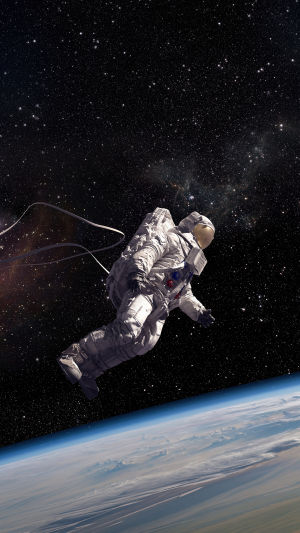
When we see astronauts working outside a spacecraft, the scene often looks quiet and graceful.
They move slowly in darkness, surrounded by the vastness of space. But Lykkers, behind this calm picture, there is a highly engineered safety system designed to prevent disaster.
One of the biggest concerns during a spacewalk is simple but serious: what if an astronaut accidentally drifts away from the spacecraft?
<h3>Why Spacewalks Are Essential</h3>
In early space missions, astronauts mainly stayed inside the spacecraft. Everything was controlled from within, which made operations safer and simpler.
However, as space technology advanced, spacecraft became more complex. External components such as solar panels, antennas, and scientific instruments sometimes require inspection or repair. These tasks cannot be completed from inside.
This led to the development of spacewalks, where astronauts step outside to perform delicate and necessary work in orbit.
Although it looks like a small step outward, it represents one of the most technically challenging operations in human exploration.
<h3>The Extreme Conditions Outside</h3>
Outside the spacecraft, the environment is extremely harsh. There is no breathable air, no natural pressure, and temperature changes can be dramatic. High-energy radiation is also present.
To survive, astronauts wear advanced protective suits. These suits are far more than clothing. They act as complete life-support systems, supplying oxygen, maintaining pressure, controlling temperature, and blocking harmful radiation.
Without these suits, survival outside the spacecraft would be impossible even for a short moment.
<h3>The Risk of Drifting Away</h3>
Even with advanced suits, one major risk remains: separation from the spacecraft.
In space, there is no gravity pulling objects down. Everything moves freely. If an astronaut loses contact with the spacecraft, they can slowly drift away without any natural way to return.
The spacecraft itself is also moving at high speed in orbit. This means distance increases quickly if no action is taken.
Because oxygen supply is limited, time becomes the most critical factor in such a situation.
<h3>The Safety Line System</h3>
One of the most basic safety measures is a strong connection line between the astronaut and the spacecraft.
This line acts as a physical link. If an astronaut drifts too far, they can pull themselves back or be guided back using the line.
It is simple, reliable, and widely used during close-range tasks. However, it also has limitations. In larger work areas, the line can restrict movement or become tangled with external structures.
Because of these limitations, additional systems were developed to increase freedom and safety at the same time.
<h3>Self-Propelled Movement System</h3>
To improve mobility, engineers developed space suits equipped with small propulsion devices. These devices release controlled bursts of compressed gas to create movement.
A commonly used gas is nitrogen due to its stability and safety. When released, it produces a gentle push in the opposite direction, allowing astronauts to adjust their position.
This system works like controlled motion in zero-gravity conditions. It gives astronauts the ability to reposition themselves even without relying entirely on the safety line.
In some missions, astronauts have successfully completed spacewalk tasks using this system effectively for navigation.
Still, most missions combine both the safety line and propulsion system to ensure maximum protection.
<h3>Emergency Rescue in Orbit</h3>
Even with multiple safety systems, rare emergencies can still occur. Equipment failure, unexpected impacts, or system malfunctions may lead to loss of control.
In such situations, other crew members inside or outside the spacecraft may carry out a rescue operation. Using their own propulsion systems, they carefully move through space to reach the drifting astronaut.
They then secure the astronaut and guide them safely back to the spacecraft.
This type of rescue requires extreme precision, coordination, and calm execution. Even small errors can increase risk significantly for everyone involved.
<h3>Why Every System Matters</h3>
Space missions involve enormous investment in training, technology, and preparation. Each astronaut represents years of preparation and highly specialized skill.
Because of this, every possible safety system is designed with redundancy. No single system is relied upon alone. Instead, multiple layers of protection work together: safety lines, propulsion devices, and emergency rescue support.
This layered design greatly reduces risk during spacewalk operations.
<h3>Safe Return From Space</h3>
Spacewalks are among the most advanced human activities ever performed. What looks like effortless floating is actually supported by carefully engineered safety systems working in harmony.
Lykkers, the next time we see astronauts outside a spacecraft, we can understand the invisible protection behind every movement. Nothing is left to chance, and every second is supported by technology designed to bring them safely back home.
As space exploration continues to evolve, these systems will become even more advanced, making future missions safer and more capable than ever before.


