

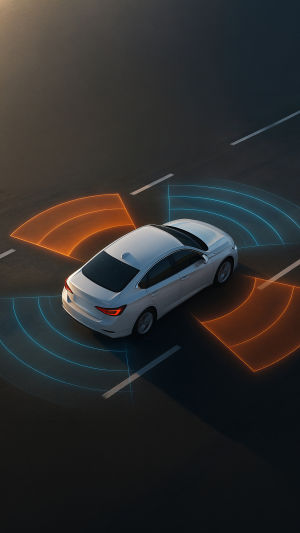
Have you ever been in a car that seemed to anticipate your every move?
It's almost as if the vehicle knows when to brake, accelerate, or even steer—almost like it's reading your mind. This is the magic of in-car sensors and intelligent systems.
The fusion of cutting-edge technology is transforming the driving experience, offering not only safety improvements but also an unprecedented level of convenience and comfort. Let's explore how these smart systems work and how they're elevating your daily drive.
<h3>The Role of Sensors in Modern Vehicles</h3>
Sensors have been around in cars for decades, but today's sensors are more sophisticated than ever. From detecting obstacles to monitoring tire pressure, these devices gather real-time data that powers the car's smart systems. They are the eyes and ears of the vehicle, constantly scanning the environment and feeding information to the car's computer system.
<b>Proximity Sensors:</b> These sensors help the car detect nearby objects, such as other vehicles or pedestrians. Whether you're parking or driving through tight spaces, they can alert you to potential collisions.
<b>Cameras:</b> High-definition cameras positioned around the car capture live footage of the surroundings. These are essential for systems like lane-keeping assistance and parking assist.
<b>Radar and LiDAR:</b> Radar sensors detect the distance between the vehicle and objects, while LiDAR (Light Detection and Ranging) creates a 3D map of the environment, enhancing the car's ability to navigate complex terrains.
Together, these sensors make the vehicle aware of its surroundings, allowing it to respond to various situations and ensure safer driving.
<h3>Intelligent Systems: The Brain Behind the Sensors</h3>
While sensors gather critical data, intelligent systems are the brains that interpret and act on this information. These systems process the data from multiple sensors and use machine learning algorithms to make decisions in real-time. Think of it like a driver who is always alert, never tired, and able to react instantly to any situation.
<b>Adaptive Cruise Control (ACC):</b> This system uses radar to maintain a safe distance from the vehicle ahead. If traffic slows down, ACC will automatically adjust the car's speed to match the flow. It's perfect for highway driving and reduces the stress of constantly adjusting your speed.
<b>Automatic Emergency Braking (AEB):</b> AEB uses sensors and cameras to detect objects in the car's path. If the system detects an imminent collision, it will apply the brakes to prevent or reduce the impact.
<b>Lane Keeping Assist:</b> Using cameras and radar, this system keeps the car centered in its lane. If the driver begins to drift without signaling, the system gently steers the car back into the correct lane.
These smart systems make driving safer and easier by acting as a second set of eyes and reflexes, constantly working to avoid accidents.
<h3>Enhancing Comfort and Convenience</h3>
It's not just about safety—car sensors and intelligent systems are also improving the comfort and convenience of your driving experience. These technologies are seamlessly integrated into the vehicle to make every ride smoother, more efficient, and more enjoyable.
<b>Climate Control:</b> Sensors inside the car monitor temperature and humidity, adjusting the climate control system to maintain the ideal comfort level for passengers. Some systems even learn your preferences and make automatic adjustments.
<b>Smart Navigation:</b> GPS systems are now enhanced with real-time data from sensors, allowing the car to provide more accurate traffic updates, alternate routes, and even recommend the best places to stop based on your preferences.
<b>Gesture Controls:</b> Some high-end cars are introducing gesture control systems. These sensors track your hand movements, allowing you to adjust settings like volume or temperature without touching any buttons.
These enhancements make the driving experience feel more like a personalized, tech-powered retreat. It's not just about getting from point A to point B—it's about enjoying the journey along the way.
<h3>The Future of In-Car Technology</h3>
As technology continues to evolve, the integration of sensors and intelligent systems in vehicles will only increase. The future of driving will likely see even more automation, where vehicles can handle more complex tasks with less human intervention. Here are a few exciting possibilities:
<b>Fully Autonomous Vehicles:</b> The ultimate goal is to create cars that can drive themselves without any human input. While we're not there yet, the continuous improvement of sensors, AI, and machine learning is bringing us closer to this reality.
<b>Improved Connectivity:</b> Future cars will be even more connected, allowing them to communicate with other vehicles, infrastructure (like traffic lights), and even pedestrians via smart devices. This communication could make traffic flow more efficient and reduce accidents.
<b>Personalized Driving Experiences:</b> As AI gets smarter, cars will become more adept at learning your preferences and adjusting systems accordingly, creating a driving experience tailored just for you.
In the coming years, we can expect smarter, more intuitive cars that work with us—not just for us—making driving a more seamless and enjoyable experience.
<h3>The Road Ahead</h3>
The fusion of sensors and intelligent systems is revolutionizing the way we drive. From improving safety to enhancing comfort and convenience, this technology is already making a significant impact on the driving experience. As these systems continue to evolve, we're on the verge of a future where driving is easier, more personalized, and safer than ever before.
So next time you get behind the wheel, take a moment to appreciate the incredible technology working silently to make your ride better.


