

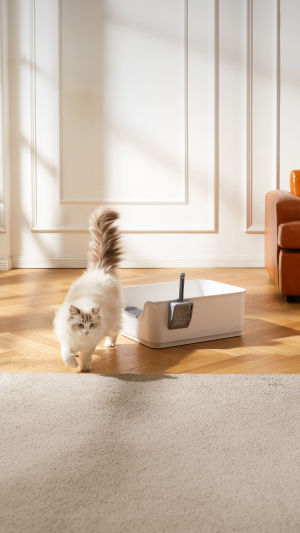
Most cat owners know the litter box needs scooping, but there's a big difference between doing it and doing it well.
A box that smells fine to you might still feel unacceptable to a cat, whose sense of smell is roughly 14 times stronger than yours.
Get the routine wrong and you're not just dealing with odor — you're inviting your cat to find somewhere more appealing to go, which usually means your carpet, your laundry, or somewhere equally inconvenient.
The good news is that keeping a litter box genuinely clean doesn't require anything fancy. It just requires consistency and knowing which products to actually use — and which ones to keep far away from the box.
<h3>Daily Scooping: Non-Negotiable</h3>
Scoop at least once a day, every day. If you have more than one cat, twice daily is better. Use a scoop with small, close-set holes so fine litter falls back into the box and only clumps get removed. Place the clumps in a sealed waste bag and throw it in the trash — never down the toilet, which can clog pipes, and not in the garden, where it can attract other animals.
After scooping, top the box up with a small amount of fresh litter to maintain a depth of about 3 to 4 inches. That depth matters: too shallow and there isn't enough litter for clumps to form properly or for your cat to dig comfortably.
A light sprinkle of baking soda on top of the fresh litter helps neutralize odor without adding any scent that might put your cat off using the box. Baking soda doesn't smell like anything to a cat, which is exactly the point.
<h3>Weekly Deep Clean</h3>
Once a week, do a full clean. Empty the entire box, then fill it with hot water and let it soak for a few minutes. Hot water alone handles most of the buildup — you don't need specialized products for this. A small amount of plain dish soap added to the hot water is sufficient to loosen any stuck-on residue from the sides and bottom.
Scrub with a sponge or brush kept exclusively for litter box use, rinse thoroughly, and then dry completely before refilling. Moisture left in the box encourages bacteria growth and makes litter clump prematurely. Air drying outside is ideal, or use paper towels if you need to speed things up.
Once dry, sprinkle a thin layer of baking soda on the bottom before adding fresh litter. It sits beneath the litter and continues absorbing odor between cleans.
<h3>What to Avoid</h3>
Keep bleach, ammonia-based cleaners, and strongly scented products away from the litter box. Cats have a serious sensitivity to these smells — bleach in particular can repel them from using the box even after it's been rinsed. And some of these chemicals are genuinely toxic if a cat inhales concentrated fumes or gets residue on their paws.
Similarly, avoid scented litters unless your cat has shown they tolerate them. What smells pleasant to humans can be overwhelming to a cat. Unscented clumping litter is usually the safest starting point.
<h3>A Few Practical Details</h3>
The standard recommendation is one litter box per cat, plus one extra. Two cats means three boxes — this gives each cat options and reduces the chance of territorial conflict around the box.
If someone in the household is pregnant, has a compromised immune system, or is planning to become pregnant, always wear gloves and a dust mask when cleaning the box. Cat feces can carry Toxoplasma gondii, a parasite that poses a genuine risk during pregnancy. Ideally, someone else handles the litter box entirely during that period.
Replace the litter box itself every one to two years. Scratches in the plastic from a cat's claws create tiny pockets that harbor bacteria and odor permanently — no amount of cleaning will fully address that.


