

Microplastic pollution is no longer confined to oceans and coastlines. Researchers are increasingly finding tiny plastic particles throughout the Amazon basin — in major rivers, urban streams, lakes, sediments and even inside fish.
Scientists are now trying to understand what this contamination does to aquatic life. Early findings suggest that exposure may interfere with breathing, digestion, growth and normal physiological processes, while the Amazon’s extraordinary diversity means different species can face very different risks.
<h3>Pirarucu Faces a Unique Threat</h3>
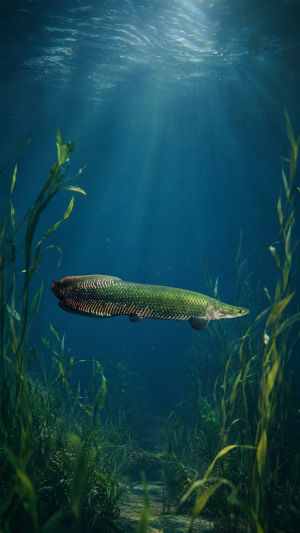
The pirarucu, or Arapaima gigas, is one of the Amazon’s most remarkable fish. It lives in oxygen-poor floodplain waters and must rise to the surface regularly to breathe air through a modified swim bladder that functions somewhat like a primitive lung.
This adaptation has helped the species survive for millions of years, but it may now increase its exposure to microplastics floating near the water’s surface.
<b>Amazonian biologist Adalberto Val explains that plastic particles entering the pirarucu’s respiratory system may cause physical damage, disrupt breathing and trigger inflammatory responses that divert energy away from other essential functions.</b>
Particles may also interact with minerals such as sodium, potassium and calcium, potentially making them less available for normal physiological processes.
Because the pirarucu regularly takes air from the surface, researchers are particularly interested in whether particles can move beyond its digestive system and into internal tissues.
<h3>Pollution Changes With the Seasons</h3>
Microplastics have already been documented across many Amazonian environments, but contamination is far from uniform.
Large rivers such as the Amazon can dilute particles because of their enormous volume. In smaller urban waterways, however, pollution may become much more concentrated.
Researchers studying streams around Manaus have recorded concentrations reaching <b>74,550 microplastic particles per cubic metre</b> in heavily affected locations.
Seasonal flooding further complicates the picture.
During high-water periods, rivers connect with floodplains and forests, allowing plastic particles to spread across much larger areas. During droughts, falling water levels can concentrate them in channels, pools and sediment, potentially increasing exposure for fish.
Water chemistry matters too. The Amazon contains acidic blackwater, sediment-rich whitewater and many other aquatic environments, each of which may influence whether particles remain suspended, fragment further or sink.
Even floating vegetation can play a role by trapping microplastics. While this may slow their movement downstream, it can also create concentrated exposure zones for animals living among or feeding around aquatic plants.
<h3>Small Fish Can Be Highly Exposed</h3>
The Amazon basin contains more than 3,000 known fish species, many of them living in narrow forest streams called igarapes.
These small waterways can be particularly vulnerable when they receive urban waste and untreated wastewater.
Research in river basins in Pará found plastic particles in the gills and digestive systems of almost every fish examined. Scientists identified <b>383 particles in total, averaging about 5.6 particles per fish</b>.
The contamination was not limited to species feeding near the bottom or on plants. Predatory fish were affected as well, suggesting that plastic pollution has already spread widely through local aquatic food webs.
For small fish, even a few particles may matter. Microplastics can become attached to gills, potentially affecting respiration and immune function, while swallowed particles may contribute to digestive irritation or physical injury.
Different species also accumulate particles differently, meaning size, diet and habitat can all influence exposure.
<h3>Plastic Is Reaching the Riverbed</h3>
Bottom-feeding species face another problem: particles settling into sediment.
Researchers estimate that parts of the river sediment may contain around <b>13 million microplastic particles per cubic metre</b>.
One species being studied is the tamoata, Hoplosternum littorale, which feeds on natural material collected from lake and floodplain bottoms.
Experiments indicate that even a microplastic concentration of <b>0.0005% in its diet</b> can increase physiological stress and contribute to weight loss.
When the body responds to foreign particles through inflammation, energy that would normally support growth or other biological processes may instead be redirected toward dealing with that stress.
<h3>Why This Matters for People</h3>
The implications extend beyond individual fish.
Fish are central to diets and livelihoods throughout the Amazon. In Brazil’s Amazonas state, average consumption is around <b>14kg per person each year</b>, compared with approximately 2.8kg nationally. In some riverside communities, reliance on fish is considerably greater.
If microplastic exposure reduces growth, health or reproduction in commercially important species, it could eventually affect food availability and local fisheries.
Potential human exposure is another concern.
Research elsewhere in the world has already found microplastics in edible fish tissues. One 2025 study involving commercial fish from Asian waters detected an average of 8.95 particles per specimen and estimated that people could ingest particles through regular fish consumption.
Equivalent data for Amazonian fish are still lacking, so scientists cannot yet determine the scale of possible human exposure in the region.
Researchers therefore caution against drawing conclusions about direct health effects before more evidence is available.
<h3>A Growing Environmental Challenge</h3>
Microplastics are only one of several pressures facing Amazonian aquatic ecosystems. Climate change, deforestation, dams, pesticides and urban pollution already affect fish populations across the basin.
Plastic adds another stressor to an environment where many species are adapted to challenging conditions such as high temperatures and low oxygen.
The next scientific challenge is no longer simply proving that microplastics are present. Researchers now need to understand how particles move through different Amazonian environments, how individual species respond and whether contamination ultimately reaches people through food.
<b>The Amazon’s rivers may appear vast enough to absorb almost anything, but growing evidence suggests that even microscopic pollution can become deeply embedded in the ecosystems — and food chains — that depend on them.</b>


