

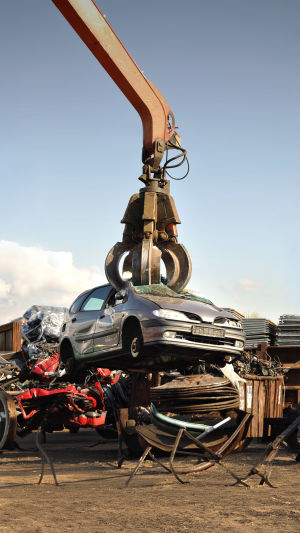
Europe is introducing a new set of rules designed to keep more automotive materials in circulation instead of losing them when vehicles reach the end of their useful life.
Regulation (EU) 2026/1738 replaces and modernises the previous framework for end-of-life vehicles. It covers much more than scrapyards: the rules reach from the original design and manufacture of a vehicle through maintenance, dismantling, component reuse and final material recovery.
The broader goal is to make Europe’s automotive sector more circular while reducing its dependence on newly extracted and imported raw materials.
<h3>Cars Designed for Dismantling</h3>
One of the biggest changes concerns how vehicles are designed.
Manufacturers will increasingly need to consider what happens to components decades later, when a car is repaired or dismantled. Parts should be easier to remove, replace, reuse and recycle, while clearer information must be available about how individual components can be taken out safely.
That could make valuable parts easier to recover instead of destroying them during dismantling.
The approach also creates a closer link between vehicle manufacturers and recycling companies. Better design and technical information should make it possible to recover higher-quality materials that can then return to industrial production.
<h3>More Recycled Plastic in New Cars</h3>
The regulation also introduces mandatory recycled-content requirements.
From <b>2032, recycled plastic will have to account for at least 15% of the plastic used in vehicles covered by the rules</b>. The target rises to <b>25% from 2036</b>.
The change is intended to create more predictable demand for recycled plastics. Until now, one difficulty facing recyclers has been uncertainty about whether manufacturers will actually purchase secondary materials on a sufficiently large scale.
Mandatory targets provide a clearer future market and could encourage investment in better sorting and recycling facilities.
Steel and aluminium are expected to follow. The European Commission will establish separate recycled-content targets for these materials, with requirements intended to apply from 2033.
<h3>Recovering Valuable Materials</h3>
Modern vehicles contain large quantities of aluminium and copper as well as smaller amounts of strategically important materials.
The new framework places greater emphasis on recovering these resources rather than allowing them to disappear into low-quality waste streams.
Rare-earth elements are particularly important because they are used in technologies such as electric motors and other automotive components. Improving their recovery could help reduce the EU’s reliance on imported primary materials.
The same principle applies to aluminium, copper, steel and plastics: materials taken from old vehicles are increasingly expected to become inputs for new industrial production.
<h3>Stricter Rules for Scrapped Vehicles</h3>
Another important part of the regulation concerns traceability.
EU authorities want clearer distinctions between genuine second-hand vehicles and vehicles that have effectively reached the end of their usable life.
Collection and documentation requirements will therefore become stricter, while enforcement should make it harder for vehicles to disappear from official treatment systems.
This matters because a vehicle treated outside authorised recycling channels may lose reusable parts and valuable raw materials while creating additional environmental risks.
<h3>Exports Will Face New Restrictions</h3>
The rules will also affect vehicles leaving Europe.
From <b>mid-2031, only roadworthy vehicles will be permitted to be exported from the EU</b>.
The measure is intended to prevent vehicles that should already be treated as waste from being exported under the label of used cars.
It does not mean that ordinary second-hand vehicle exports will end. Instead, exporters will need to demonstrate that vehicles are genuinely suitable for continued road use.
For the European recycling industry, this could also mean that more end-of-life vehicles — and the materials contained inside them — remain within the EU.
<h3>Manufacturers Take More Responsibility</h3>
The regulation strengthens the principle of Extended Producer Responsibility.
Vehicle producers will contribute to the cost of collecting and treating cars after they reach the end of their useful life. The idea is simple: manufacturers placing vehicles on the European market should also share responsibility for what happens to those vehicles later.
This creates another incentive to design cars that are less complicated and expensive to dismantle.
The framework will also extend beyond passenger cars to additional categories, including <b>lorries, buses and motorcycles</b>.
<h3>What It Means for Drivers</h3>
For most motorists, the changes will not produce an immediate difference at the dealership.
Many requirements are being introduced gradually over the next decade, and their biggest direct effect will initially fall on vehicle manufacturers, dismantlers, recyclers and exporters.
Over time, however, drivers could encounter vehicles designed with more replaceable components, clearer repair and dismantling information and a growing proportion of recycled materials.
The regulation may also strengthen the market for reusable automotive parts by making components easier to identify and recover.
<h3>A Different Life Cycle for Cars</h3>
Europe’s new approach treats an old vehicle less as waste and more as a collection of materials and components that still have economic value.
Instead of concentrating only on how a car performs while it is on the road, manufacturers will increasingly have to consider what happens before production, during repairs and after the vehicle is finally withdrawn from service.
<b>The biggest change is therefore not one individual recycling target. It is the shift towards designing vehicles from the beginning with dismantling, reuse and material recovery already in mind.</b>


