

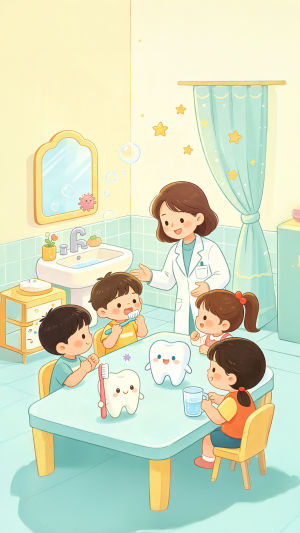
Helping children learn to brush their teeth can be easier when the experience is engaging and predictable.
Songs, playful characters, and brushing together can encourage participation while children develop the skills needed for thorough cleaning.
With a consistent routine and age-appropriate guidance, brushing can become a natural part of everyday life.
<h3>Why Make Brushing Fun?</h3>
Young children are still developing the coordination needed to brush effectively. Turning brushing into a short, enjoyable activity can hold their attention and make the routine easier to follow.
<h3>Create a Tooth-Brushing Character</h3>
Give a favorite tooth character a name and personality. Let your child pretend to clean the character’s teeth before brushing their own. A toy, puppet, or simple drawing can make the activity more interactive and enjoyable.
<h3>Turn Two Minutes Into a Game</h3>
Children should brush twice a day for about two minutes. Use a timer, two-minute song, or simple “tooth-cleaning mission” to make the time easier to follow.
“The consensus recommendation is for people to brush their teeth for two minutes twice a day with a toothbrush that has soft bristles.” — American Dental Association.
A familiar routine can help children know what to expect and make brushing feel more manageable.
<h3>Brush Together</h3>
Children can learn by watching how others brush. Brush alongside your child and demonstrate gentle, thorough movements. Allow them to participate while helping with areas they have difficulty cleaning.
<h3>Try a Simple Reward Chart</h3>
A morning-and-evening chart can make the routine visible and engaging. Stickers can provide positive encouragement, while non-food rewards such as choosing a bedtime story can add variety.
<h3>Focus on Thorough Cleaning</h3>
Teach children to clean the front, back, and chewing surfaces of their teeth, including along the gumline. Encourage gentle pressure and careful coverage rather than brushing too forcefully.
Use a soft-bristled, child-sized toothbrush with an age-appropriate amount of fluoride toothpaste.
<h3>A Simple Brushing Routine</h3>
1. Apply the appropriate amount of fluoride toothpaste.
2. Brush for about two minutes.
3. Clean all tooth surfaces gently and thoroughly.
4. Spit out excess toothpaste rather than swallowing it.
5. Provide assistance or supervision when needed.
For children younger than 3, use no more than a rice-grain-sized amount of fluoride toothpaste. From ages 3–6, use no more than a pea-sized amount. Supervision can help ensure that children use the correct amount and spit out excess toothpaste.
<h3>Make the Routine Comfortable</h3>
If a child is reluctant to brush, keep the approach calm and flexible. Changing the song, story, or brushing activity may make the routine more appealing. Children develop brushing skills at different rates, so continued assistance may be appropriate until they can clean their teeth effectively.
A playful and consistent approach can make tooth brushing easier for children to learn and follow. Simple activities, proper brushing, fluoride toothpaste, and appropriate supervision can help establish healthy habits that support children’s dental care as they grow.


