

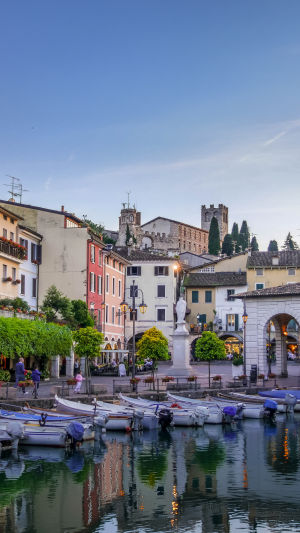
Some cities announce themselves immediately. Brescia does not. It sits between Milan, Verona and Lake Garda with surprisingly little interest in competing for attention.
There are no endless queues curling around every corner, no sense that you must wake at 6am to “beat the crowds,” and no pressure to photograph every square before lunch. That is exactly what makes it so appealing.
<b>Brescia feels less like a city performing for visitors and more like one simply getting on with its day — and inviting you to join in.</b>
Brescia
<h3>Start Beneath the City</h3>
Begin with Ancient Brixia. The archaeological area contains the remains of the Roman city, including the Capitolium, Republican Sanctuary and the Winged Victory. What makes the experience memorable is not just the scale of the ruins, but the contrast. You walk through a modern Italian city, turn a corner, and suddenly find yourself looking at structures that have been sitting there for nearly two thousand years. An integrated museum ticket costs €19 and includes the archaeological area, Santa Giulia Museum and several other civic museums.
From here, continue to Santa Giulia Museum. Do not treat it like somewhere you need to “complete.”
The former monastery is huge, layered and slightly overwhelming in the best possible way. Roman mosaics, Lombard history and archaeological remains appear one after another.
<b>Recommendation:</b> choose the sections that interest you most and leave before museum fatigue ruins the afternoon.
<h3>Lunch Somewhere Without a View</h3>
This may sound like terrible travel advice, but Brescia is a good city for choosing a restaurant because it looks busy rather than because it appears on a must-visit list.
Head toward the Carmine District.
Once one of the city’s rougher neighbourhoods, it now mixes old residential streets with small cafés, restaurants and independent businesses.
Look for casoncelli, the local filled pasta, often served simply with butter and herbs.
A casual lunch usually costs around €12–€20 per person, while dinner can sit closer to €25–€40.
Take your time.
<b>Brescia suits the kind of lunch where you stop checking the clock halfway through.</b>
<h3>Let the Afternoon Drift</h3>
After lunch, walk toward Piazza della Loggia.
It is elegant without being theatrical: pale stone, arcades, a Renaissance clock and enough open space to make lingering feel natural.
Continue toward the Old Cathedral and New Cathedral, then lose the direct route for a while.
This is where Brescia starts becoming more interesting. Small courtyards, side streets and сhurches appear without much ceremony. San Cristo Сhurch is one of the most striking examples, with an interior so richly painted that it is sometimes compared with far more famous Italian masterpieces.
<b>The city rewards curiosity more than efficiency.</b>
If a doorway looks interesting, go in. If a side street seems quieter, follow it.
<h3>Day Two: See the City From Above</h3>
The next morning, climb toward Brescia Castle. Sitting on Cidneo Hill, the fortress gives you a completely different sense of the city. From above, Brescia looks compact, dense and surprisingly green. Walk through the castle grounds slowly rather than treating the viewpoint as the only objective. The hill itself feels removed from the streets below, especially early in the day.
Afterwards, return to the centre for coffee and another long walk. If you are staying longer, Lake Iseo and Monte Isola make easy extensions, but Brescia does not need to be treated merely as a base for somewhere else. Two full days are enough to understand its rhythm.
<h3>Where to Stay</h3>
For a short visit, stay close to the historic centre.
Simple rooms often begin around €60–€80 per night, while comfortable central hotels commonly cost €90–€130. There is little reason to rent a car inside the city. Most major sights are walkable, and the metro is useful when you want to move farther out.
<b>Recommended budget:</b> around €75–€110 per person per day with shared accommodation, casual meals and museum visits.
For better hotels and longer dinners, €120–€160 gives you more freedom.
<h3>Who Will Love Brescia?</h3>
Brescia is not the right choice if you want Italy’s most famous skyline or a packed list of iconic landmarks. It is better for travelers who enjoy cities between the attractions. People watching in a square. A bakery you did not plan to visit. A сhurch with almost nobody inside. A lunch that becomes the main event of the afternoon.
It also works particularly well in spring and early autumn, when the weather is comfortable enough for long walks.
<h3>The City You Almost Skipped</h3>
Perhaps Brescia’s greatest advantage is that expectations usually arrive low. Then Roman temples appear beneath modern streets. Lunch runs longer than planned. The castle gives you a view you did not know you needed. And by the second day, the city begins to feel less like a hidden gem and more like somewhere everyone else has simply been too busy to notice.
<b>Brescia does not compete for your attention. It waits for you to slow down enough to give it some.</b>


