

Some surfaces really do collect more dust than others. The reason is not simply where they are placed or how often a room is cleaned. Materials themselves can influence how easily particles settle and stick.
Rough or porous surfaces create more contact points for dust, while even furniture that looks perfectly smooth may have microscopic imperfections that trap fine particles.
Static electricity also plays a role. Materials such as acrylic, PVC, polyester and polypropylene tend to hold an electrical charge for longer, which can attract charged dust particles. Metal behaves differently because it conducts electricity and loses static charge more quickly.
<h3>Humidity Matters More Than You Think</h3>
Dry air can make dust cling more stubbornly to furniture.
Moisture in the air helps electrical charges dissipate, so static attraction becomes weaker when humidity rises. During colder months, or in heavily air-conditioned homes, the air is often drier and dust may become more noticeable.
That does not mean every home should suddenly become humid. Excess moisture can create other problems, but over-drying the air may make static-related dust worse.
<h3>Anti-Static Spray Has Limited Benefits</h3>
Anti-static products sound like an obvious solution, but their effect may be modest. In a four-week household experiment, one side of a piece of furniture was treated with anti-static spray while the other was left untouched. The treated section appeared slightly cleaner, but the difference was so small that it was difficult to see clearly.
For most households, this probably makes anti-static sprays an optional extra rather than an essential cleaning product.
<h3>Air Purifiers Make a Bigger Difference</h3>
The most successful change was using an air purifier. Air purifiers equipped with HEPA filters reduce the number of airborne particles circulating through a room. Fewer particles in the air means fewer can eventually settle on shelves, tables and other surfaces.
After a week of running an air purifier close to the test area, noticeably less dust had accumulated than during the other stages of the experiment.
<b>Practical tip:</b> Place the purifier where air can circulate freely rather than hiding it behind furniture. Regular filter replacement is also important if you want it to remain effective.
<h3>Your Interior Design Can Help</h3>
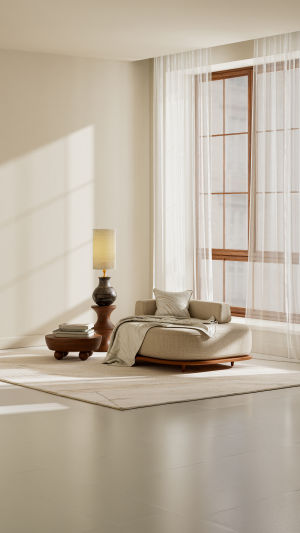
A low-dust home is not only about cleaning equipment. The way a room is designed can influence how much maintenance it requires. Open shelving, decorative objects, detailed joinery and large glass surfaces all create additional places where dust can settle. Dark floors and furniture may also make every particle more visible. Simpler interiors are generally easier to maintain. Wood, stone and other natural-looking materials can help create visual interest without relying on numerous decorative objects.
Glossy surfaces may collect slightly less dust in some situations, but matte finishes can actually feel easier to live with because settled dust is less obvious.
<h3>Make Dusting Easier</h3>
The most effective strategy may be to reduce the number of surfaces that need constant attention. Keep frequently used areas relatively uncluttered, avoid filling every shelf with small objects and consider closed storage for items you do not need on display.
Vacuuming regularly, using a damp microfibre cloth instead of a dry duster and running an air purifier can all help reduce how quickly visible dust returns.
<b>A completely dust-free home is unrealistic, but a combination of cleaner air, balanced humidity and simpler surfaces can make a real difference. The goal is not to eliminate every particle, but to create a home where dust accumulates more slowly and cleaning takes far less effort.</b>


