

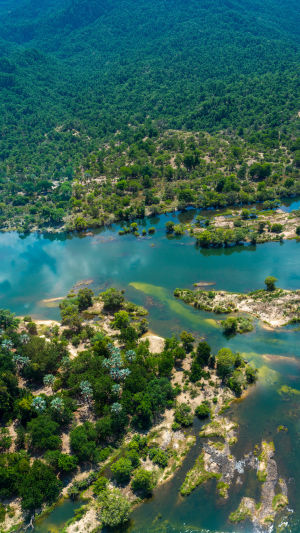
Hello, and welcome. You've probably seen the Zambezi in photos without knowing it.
That wide curtain of water at Victoria Falls, the one that throws mist hundreds of feet into the air, is the river at its most dramatic.
But the Zambezi runs for about 1,600 miles, and the falls are just one loud moment in a much longer, quieter story.
<h3>Why the river matters</h3>
The Zambezi is the fourth-longest river in Africa, starting in Zambia and running through Angola, along the Zimbabwe border, into Mozambique, and finally out to the Indian Ocean. It feeds Victoria Falls, one of the largest waterfalls on the planet, and then carves through Batoka Gorge below it. That range, from roaring drop to slow floodplain, is exactly why a trip here can look so different depending on where you join the river.
<h3>Where to actually go</h3>
Most travelers base themselves in Victoria Falls town on the Zimbabwe side or Livingstone on the Zambian side. From there you're a short drive from the falls themselves and the gorge viewpoints. If you want the river without the crowds, head to the Lower Zambezi National Park, where the water spreads wide and flat and you can spend a day on a boat watching elephants cross.
Mana Pools on the Zimbabwe side is another spot people return to for the same reason.
Zambezi River
<h3>Getting there and around</h3>
You'll usually fly into Victoria Falls Airport or Livingstone's Harry Mwanga Nkumbula International, both of which handle regional flights from Johannesburg. From the airport it's a 20 to 30 minute drive into town. Once you're set, most river activities run as guided day trips, and a guided canoe trip through the gorge section typically costs around $150 to $250 per person for a half day.
Cross-border trips between Zimbabwe and Zambia are common and quick at the main border post.
<h3>Timing your visit</h3>
Water levels change the whole experience. The falls run heaviest from February to May, when the spray is thick and some walkways get soaked. By September and October the flow drops and you can see the rock face more clearly. For wildlife on the Lower Zambezi, the dry season from June to October pulls animals toward the water, which makes boat and canoe trips more productive.
<h3>Practical planning tips</h3>
Book your accommodation and any guided river trips ahead of time if you're traveling in the peak dry months, since the good lodges near the falls fill up. Carry a light rain layer during high-water season, even if the sky is clear, because the spray at the falls soaks you within minutes. And keep a buffer day in your plan for border crossings or flight delays, which do happen in this region.
The Zambezi rewards you for picking your stretch deliberately. See the falls for the spectacle, then give yourself a few days downstream where the water slows and the animals come to drink. Next time you plan a trip to southern Africa, put the river on the map before you book the flights, not after.


