

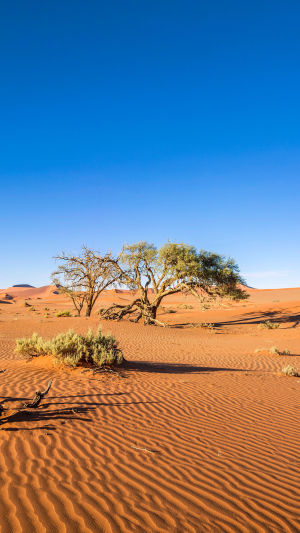
Welcome back. You probably expect a national park to mean green trees and a shaded trail.
Namib-Naukluft is the opposite, and that's the whole point. It's one of the largest protected areas in Africa, covering roughly 49,000 square kilometers of red dunes, gravel plains, and dry mountains in western Namibia.
You come here for scale and silence, not shade.
<h3>Why the dunes pull people in</h3>
The centerpiece is Sossusvlei, a clay pan ringed by some of the tallest dunes on earth. Big Daddy rises about 325 meters, and Dune 45, named for its distance from the Sesriem gate, is the one most visitors climb at sunrise. Climb it and you'll feel your calves complain on every step, because sand gives way underfoot.
Deadvlei, a white pan scattered with blackened camel thorn trees that died centuries ago, sits a short walk from the parking area. Get there early. The light turns flat by mid-morning and the heat builds fast.
<h3>The gate that sets your schedule</h3>
Sesriem is the main entrance, and the gate opens at sunrise and closes at sunset, with times shifting through the year. Staying inside the park at Sesriem Camp or nearby lodges buys you an hour's head start on day visitors, which matters because the first light on the dunes is the reason most people come.
The drive from the gate to Sossusvlei is about 60 kilometers, and the last 5 kilometers are deep sand that a normal sedan won't handle. Park at the 2x4 lot and take the shuttle, or drive a 4x4 if you have one.
Namib-Naukluft National Park
<h3>What it costs and how to get there</h3>
Park entry runs around $10 per person per day for international visitors, plus a small fee per vehicle. Most people fly into Hosea Kutako International Airport near Windhoek and drive, which takes about five hours on the C24 and D854 gravel roads. A 4x4 rental typically costs $80 to $120 per day. Fill your tank in Solitaire or Sesriem before heading in, because fuel stops are sparse and cell signal disappears for long stretches.
<h3>Beyond the famous pan</h3>
Sossusvlei gets the crowds, but the park holds more. The Sesriem Canyon drops about 30 meters and is worth an hour's walk in the cool of the morning. Further north, the Naukluft section has hiking trails and a spring-fed ravine that feels nothing like the dune country. If you have a spare day, drive the gravel loop toward the Kuiseb Canyon and watch the landscape change from red sand to pale rock in a matter of kilometers.
<h3>Before you go</h3>
Carry more water than you think you need, at least 3 liters per person per day, and don't count on refills. Sunscreen, a hat, and closed shoes for the dune climbs are non-negotiable. Book accommodation months ahead if you're traveling in the cooler months from May to September, when daytime highs sit near 25°C and nights drop close to freezing. Summer from November to February pushes past 40°C by afternoon, so plan drives for early morning and late afternoon.
Namib-Naukluft rewards the traveler who plans around light and heat rather than fighting them. Climb one dune at sunrise, sit in the quiet of Deadvlei before the shuttle crowds arrive, and let the emptiness do the rest. Next time you plan a park trip, remember that the best hours here are the ones most people sleep through.


