

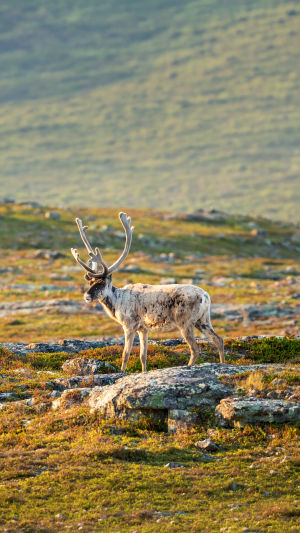
Winter in the Nordic Arctic brings freezing temperatures, strong winds, deep snow, and long periods with little daylight. For reindeer living across northern regions, surviving this season requires more than simply enduring the cold.
Their bodies are adapted to conserve heat, their hooves help them move across difficult terrain, and their feeding habits allow them to search for limited food beneath the snow.
<h3>A Coat Built for Cold Weather</h3>
One of the reindeer's most important winter adaptations is its thick coat. The fur provides insulation by trapping air close to the body, helping reduce heat loss when temperatures fall. Reindeer also develop a dense undercoat, while longer outer hairs provide an additional layer of protection against the elements.
Many of these outer hairs contain air spaces that contribute to insulation. This helps the animals retain warmth during cold spells and when exposed to icy winds. Their coat also changes with the seasons, becoming thicker during colder months and lighter as warmer weather returns.
Keeping warm is essential because maintaining body temperature requires energy. Effective insulation helps reindeer conserve that energy for movement, feeding, and other daily needs. Their winter coat is therefore more than a covering; it is a key part of their ability to live in the far north.
<h3>Hooves That Help Them Cross Snow</h3>
Reindeer hooves are adapted to changing ground conditions throughout the year. In winter, the pads become firmer, and the hooves can spread to provide a more useful surface for walking across snow. Their shape helps support movement over terrain that may be slippery or uneven.
The hooves are also important when food lies beneath the snow. Reindeer use them to scrape away snow and expose plants below the surface. This behavior, known as cratering, allows them to reach some of the vegetation available during winter.
Finding food this way takes effort, particularly when snow is deep or hardened by wind. Reindeer must balance the energy spent digging with the nourishment they can obtain. Their ability to move across snowy landscapes and uncover buried vegetation makes their hooves an important tool for winter survival.
<h3>Finding Food When Plants Are Scarce</h3>
Food becomes more difficult to find during the Arctic winter because much of the vegetation is covered by snow and plant growth slows. Reindeer rely heavily on lichens, especially in winter, alongside other available vegetation. Lichens can grow in northern environments where many plants struggle to thrive, making them an important seasonal food source.
When rain falls onto snow and freezes, a hard layer of ice may form. This can make feeding much more difficult because the animals may be unable to reach vegetation that would normally be accessible. Food availability is therefore influenced not only by temperature but also by the type and condition of the snow.
<h3>Saving Energy Through the Winter</h3>
Winter survival depends on managing energy carefully. Reindeer cannot spend every day moving long distances or continuously searching for food, especially since each activity consumes valuable energy. They adjust their movement and feeding behavior according to conditions and available resources.
Their insulating coat helps reduce heat loss, while their ability to digest a range of northern plants allows them to use the food they find. Reindeer also build up energy reserves during more favorable periods of the year. Those reserves become particularly important when winter feeding is difficult.
<h3>Living With Long, Dark Days</h3>
In northern parts of the Nordic region, winter daylight can be very limited, and some locations experience periods when the sun does not rise above the horizon. Reindeer continue to feed, rest, and travel through these conditions.
Their eyes also show seasonal adaptations. Research has found that the reflective layer behind the retina changes in appearance between summer and winter, helping the eyes function under different light conditions. This adaptation is especially relevant in environments where daylight is weak, and the landscape can remain dim for extended periods.
Nordic reindeer survive Arctic winters through a combination of physical adaptations and careful use of available resources. Reindeer survival depends on both their remarkable natural features and the environmental conditions around them.


